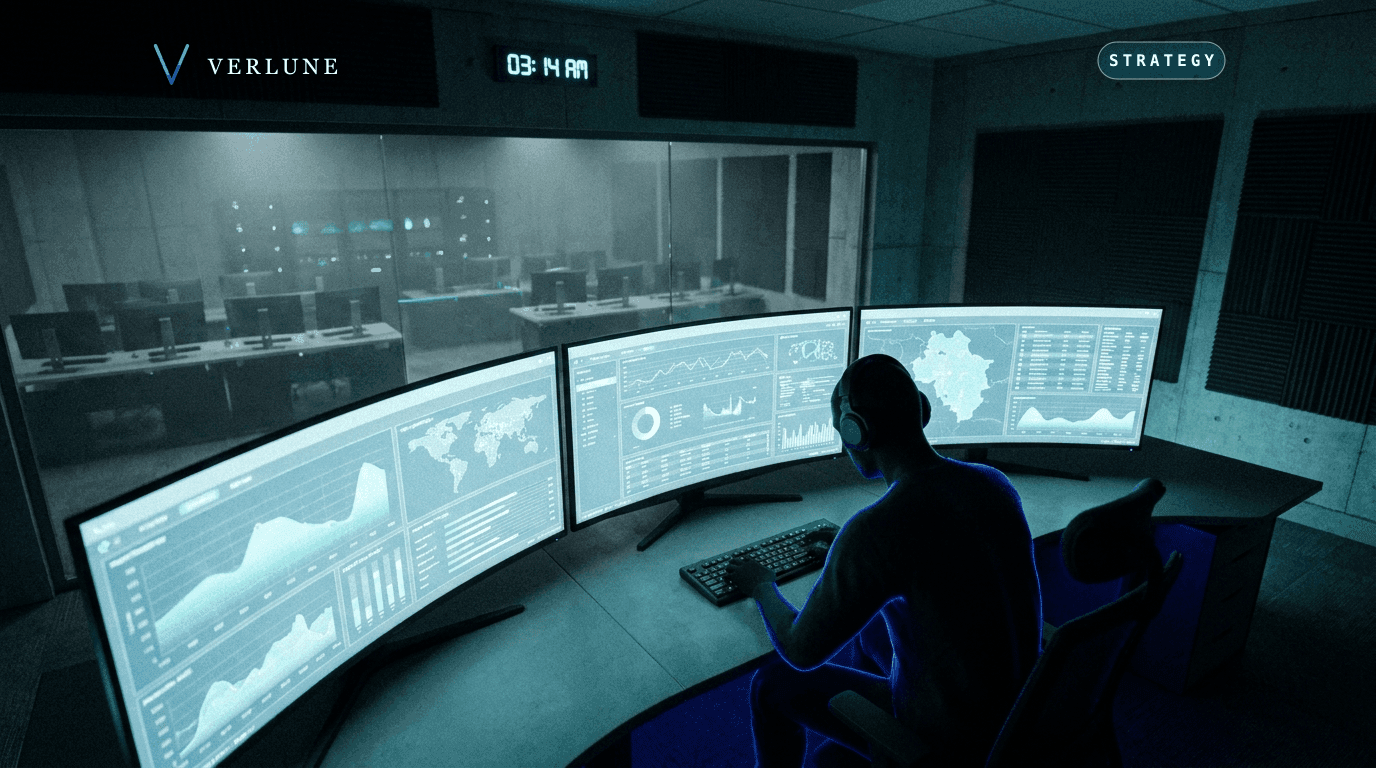
The most expensive mistake in OF operations is not underpaying chatters or hiring the wrong ones. It is scheduling them in a way that guarantees burnout within four to eight weeks. A burned-out chatter does not quit dramatically. She just stops caring — replies get shorter, sales close 15% less, and by the time you notice the numbers, you have already lost fans. The shift structure is the difference between a chatter who lasts eighteen months and one who quits in two.
The 24/7 coverage assumption
Fans do not care about your schedule. They message when they are up, and the ones who spend the most money often message at 2am. If your reply time drifts from under an hour to over three hours during those windows, PPV conversion drops. The fan's excitement window has a shelf life. Which means someone competent has to be at the keyboard at every hour of every day. The question is how to structure that without burning humans.
3-shift vs 4-shift debate
The two viable models. 3-shift means eight-hour shifts, three chatters per creator per day. Simpler to schedule, cheaper, easier to hire for, but eight hours of concentrated DM work is genuinely exhausting and quality drops in the last two hours of each shift. 4-shift means six-hour shifts, four chatters. More expensive, but every chatter finishes the shift still sharp, and the fan sees consistent energy across the whole day.
For lower-volume creators, 3-shift is fine. For anyone doing more than 8-10k a month, the quality drop in the last two hours of an 8-hour shift costs more than the extra chatter salary. We run 4-shift on most of our roster.
Time zone allocation
The correct allocation is not one chatter per time zone. It is having chatters live in a time zone that aligns with the shift they cover, so their peak hours are the creator's peak fan hours. If your fan base is US-heavy, the 8pm-2am ET shift needs to be someone whose normal life happens during those hours — an LATAM-based chatter working her afternoon, or a US-East chatter working her evening. Do not have someone in Manila working 3am local because it maps to US evening. Their quality will collapse within a month.
Peak hour overlap — the double-cover window
Between roughly 8pm and midnight in the creator's largest fan geography, DM volume roughly doubles. Single-cover during this window is the moment where fans get slower replies and PPV sends miss the right conversation moment. We double-cover this four-hour window with two chatters. One handles new incoming DMs. The other handles PPV sends, custom coordination, and follow-ups from earlier in the day. This is the highest-revenue window and it deserves the extra headcount.
Rest days and consecutive shift limits
- No more than five consecutive days worked without a full rest day.
- No back-to-back shifts on different creators (context-switching burnout is real).
- Every chatter gets a full weekend off at least once every three weeks.
- Rotating shifts (moving between morning and night on different weeks) is banned. Circadian disruption kills quality.
The handoff notes system
At the end of every shift the outgoing chatter writes handoff notes on active conversations: who is close to buying a PPV, who has a custom in progress, who was upset earlier and needs gentle follow-up. The incoming chatter reads these before touching the keyboard. This is a five-minute process that saves half an hour of confused fan conversations and prevents the "who am I again?" moment fans notice.
The escalation ladder
When a shift is going badly — a chatter is overwhelmed, a fan complaint blows up, a technical issue kills message send — there needs to be a clear next person to page. In our model that is a shift lead who covers three creators simultaneously and can jump in on any of them for the emergency window. Below that is the head of chatting, who handles anything the shift lead cannot resolve within twenty minutes. Below that is the creator herself, but she should not be paged for anything except account-level emergencies. If the creator is being interrupted by chatter drama regularly, the escalation ladder is broken.
Weekend vs weekday differences
Weekends bring more casual browsing traffic but also higher conversion rates because fans have more free time to actually engage. The peak window shifts earlier — the double-cover moves from 8pm-midnight on weekdays to 4pm-10pm on weekends. If you use the same shift structure both, your peak overlap is off by four hours and you leave revenue on the table. This is a small tweak with a large earnings impact.
The whole point of a well-structured chatter operation is that fans get consistent, engaged replies at every hour without the creator having to be involved. That takes deliberate scheduling and enough chatters that no one is running on fumes. If you want to see what our exact shift schedule looks like across a full week, apply and we will walk you through the ops document.